OPEN ACCESS

JOURNAL INFORMATION

INDEXED BY


AUTHOR RESOURCES
ARTICLE TEMPLATE

PLAGIARISM CHECKER

Every manuscript submitted to this journal will be checked using Turnitin Similarity Check before entering the review process.

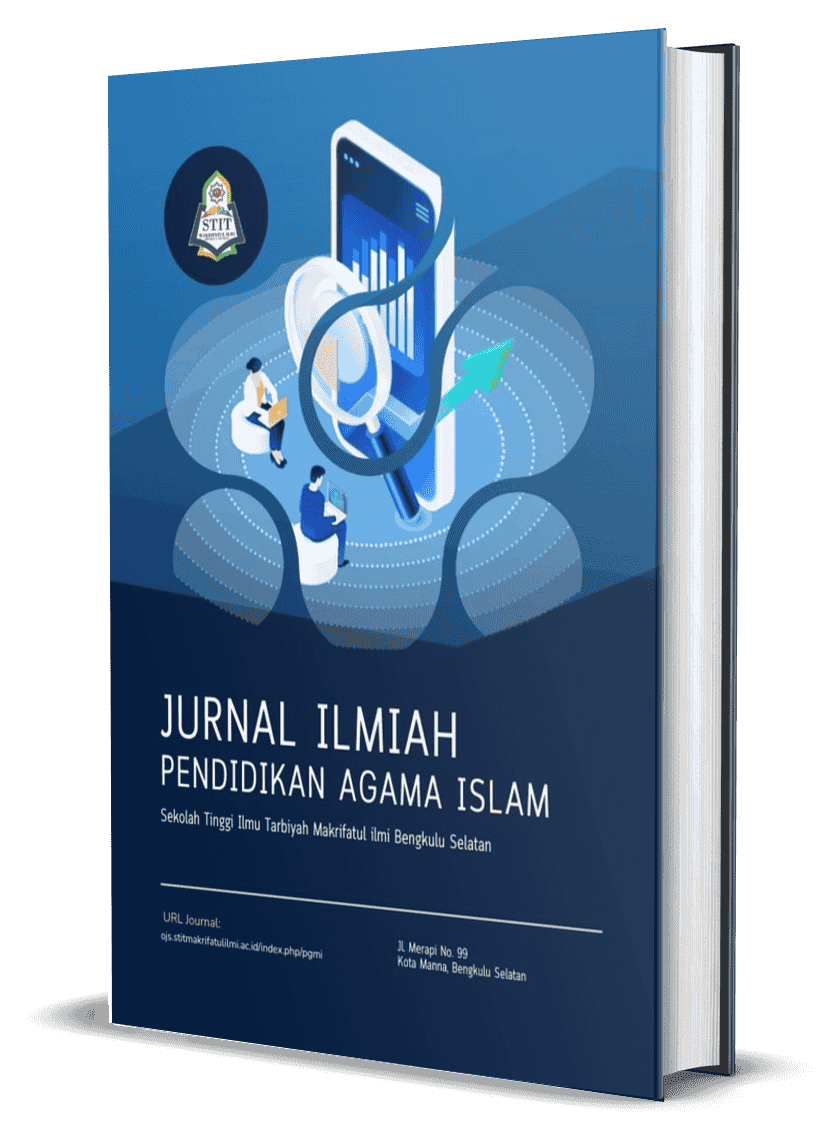
EL MAKRIFAH PAI, Volume 3, Number 1 (2026), presents eight scholarly articles exploring contemporary issues in Islamic education, including the genealogy of Islamic educational institutions in the Indonesian archipelago, religious moderation, Artificial Intelligence-enhanced learning, environmental jurisprudence, educational evaluation, Islamic leadership, and students' mental resilience in the digital era.
These contributions reflect the significance of interdisciplinary and innovative approaches in advancing Islamic education while addressing contemporary social, educational, and global challenges. The Editorial Board sincerely thanks the authors, peer reviewers, and editors for their valuable contributions and hopes this issue will serve as a meaningful reference for future research and educational practice.


This issue (Vol. 1 No. 1, 2025) is published by the Department of Islamic Religious Education (PAI) at STIT Makrifatul Ilmi Bengkulu Selatan through the Open Journal System platform. It features eight scholarly articles addressing contemporary discourses in Islamic education, with emphasis on curriculum integration, religious literacy, identity formation, and educational technology.
Key topics include the integration of Aswaja values into the Merdeka Curriculum, the role of PAI students in promoting campus-based religious literacy, and the construction of Muslim identity among millennials in digital spaces. Further contributions examine pedagogical strategies in multicultural contexts, instructional competence development, and the adoption of AI and AR technologies in Islamic education.
This edition offers conceptual and practical insights intended to enrich academic dialogue and support transformative practices in the field of Islamic education.


This work is licensed under a Creative Commons Attribution-ShareAlike 4.0 International License .
